




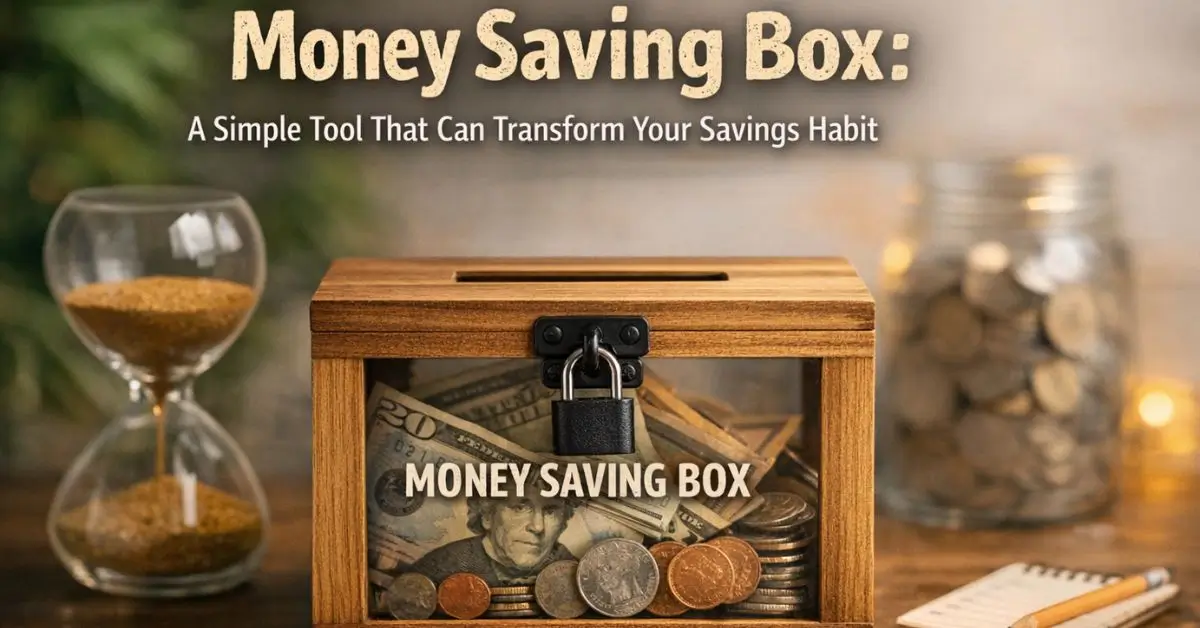
Money saving box might sound simple, but it can completely change the way you approach saving money. If you struggle with budgeting or often spend what you plan to save, a physical saving system can build discipline and consistency.
- Why a Money Saving Box Still Works in 2026
- Types of Money Saving Box Options
- Plastic vs Wooden Money Saving Box
- How to Use a Money Saving Box Effectively
- Money Saving Box vs Savings Account
- Trending and Viral Money Saving Box Challenges
- Common Mistakes to Avoid
- Is a Money Saving Box Right for You?
- Final Thoughts on Using a Money Saving Box
Even in the digital banking era, many adults and families in the U.S. still use a money saving box to reach short-term goals, control spending, or teach children about financial responsibility.
Why a Money Saving Box Still Works in 2026
You may wonder why anyone would use a cash saving money box when savings accounts exist. The answer is behavioral psychology. When you physically place cash inside a box, you feel the progress. That visual and physical action reinforces discipline.
Unlike a traditional savings account, where your money sits digitally, a saving box creates:
- A clear visual goal
- A physical reminder of your commitment
- Reduced temptation to spend online
If you want to compare physical saving methods with bank-based savings strategies, you can explore related budgeting tools on Financgate.com to understand how both systems complement each other.
Types of Money Saving Box Options
Choosing the right money saving box depends on your goal and lifestyle.
Money Saving Box for Adults
A money saving box for adults usually has a lock and a larger capacity. Many adults use it for:
- Emergency funds
- Vacation savings
- Debt payoff challenges
- Holiday shopping budgets
Large money boxes for adults often include charts that track progress toward specific amounts such as $10,000 or $20,000 challenges.
Money Saving Box for Kids
Teaching children about money early builds strong habits. A simple money box helps kids understand:
- Delayed gratification
- Goal setting
- Value of saving
Many parents search for Amazon money saving box options designed specifically for kids. If you browse platforms like Amazon, you will find colorful and lockable options that make saving engaging.
If you want to go beyond basic saving habits, explore our guide on Best Investment Account for Kids: How You Build Wealth for Your Child’s Future to learn how investing can grow your child’s money over time.
Goal-Based Saving Boxes
You may have seen trends like:
- Money saving box 20000 challenge
- 100-day money saving box
- One lakh money saving box chart
While some challenges originate outside the U.S., the concept remains universal. You assign daily or weekly amounts and gradually fill your box until you hit your target.
Plastic vs Wooden Money Saving Box
Material matters more than you think.
Plastic money saving box options are affordable and lightweight. However, wooden money saving box models often feel more durable and secure.
If security matters, choose a model with:
- A metal lock
- Limited opening access
- A non-transparent design
This reduces the temptation to open it prematurely.
How to Use a Money Saving Box Effectively
Owning a box is not enough. You need a strategy.
Here is a simple system:
- Set a clear money goal saving box target.
- Decide your saving frequency (daily, weekly, biweekly).
- Place your box somewhere visible.
- Avoid opening it until you reach your goal.
You may even combine your box with a tracking notebook or money saving book to monitor your progress.
Consistency matters more than large amounts. Saving $20 weekly creates stronger discipline than waiting to save $500 occasionally.
Money Saving Box vs Savings Account
You might ask whether a traditional savings account is better.
A savings account offers:
- Interest earnings
- FDIC insurance
- Higher security
A money saving box offers:
- Behavioral control
- Immediate visual progress
- Cash-only discipline
According to guidance from Consumer Financial Protection Bureau, separating spending money from savings improves financial habits.
To understand how interest, liquidity, and bank protection work, browse our Savings Account category for detailed comparisons.
The best strategy often combines both:
- Use a saving box for short-term goals
- Use a high-yield savings account for emergency funds
Trending and Viral Money Saving Box Challenges
Social media has popularized saving challenges. You may see viral money saving box systems labeled as:
- 100-day challenge
- $5 daily challenge
- Cash envelope box system
Although some trends fade quickly, structured saving challenges can motivate you to stay consistent.
Before buying a trending product, focus on functionality rather than hype.

Common Mistakes to Avoid
When using a money saving box, avoid these errors:
- Setting unrealistic goals
- Opening the box too early
- Failing to track contributions
- Saving inconsistently
Your saving habit should feel sustainable, not stressful.
Is a Money Saving Box Right for You?
If you:
- Spend impulsively
- Prefer cash budgeting
- Want to build discipline
- Are teaching children about money
Then a money saving box can be a powerful tool.
However, if you aim to build long-term wealth or earn interest, you should not rely solely on cash storage.
Final Thoughts on Using a Money Saving Box
A money saving box may seem old-fashioned, yet it remains one of the simplest ways to build financial discipline. By combining goal setting, visual tracking, and consistency, you create habits that improve your long-term money management.
If you want more practical saving strategies, budgeting tools, and personal finance guides designed for U.S. readers, visit Financgate.com and start building stronger financial habits today.